
Recalibrating Your Fitness: Why Adapting is the Key to Long-Term Success
If you've started the week determined to get fit, only to see your routine fall apart, you're not alone. This usually isn't about a lack of motivation.

Traditional fitness plans fail because they demand perfect adherence from start to finish. But real life throws work stress, old injuries, or packed schedules at you. If your plan refuses to adapt, it will fall apart.
Getting fit means discovering what works for you, not forcing yourself through strict routines. American College of Sports Medicine (ACSM) research finds flexible, personalised training plans keep people exercising longer than rigid, generic programs. Your fitness plan must grow with you, not hold you back.
Here are some real success stories that show how adapting your approach can lead to lasting, positive changes:
- Benjamin battled constant pain from broken bones and hesitated to exercise. By adjusting his routine step by step, he rebuilt confidence and rediscovered the joy of movement.
- Managing Stress: When stress piled up, a single mother made progress. By following a routine that supported her and fit her day-to-day life.
- Finding Lost Motivation: Even fitness pros face tough periods. After a back injury, Richie struggled with motivation, but by taking it slow and following a flexible plan, he was able to progress and regain his motivation.
4 Steps to Recalibrate Your Routine: If you’re facing a setback or your schedule is all over the place, try these flexible strategies:
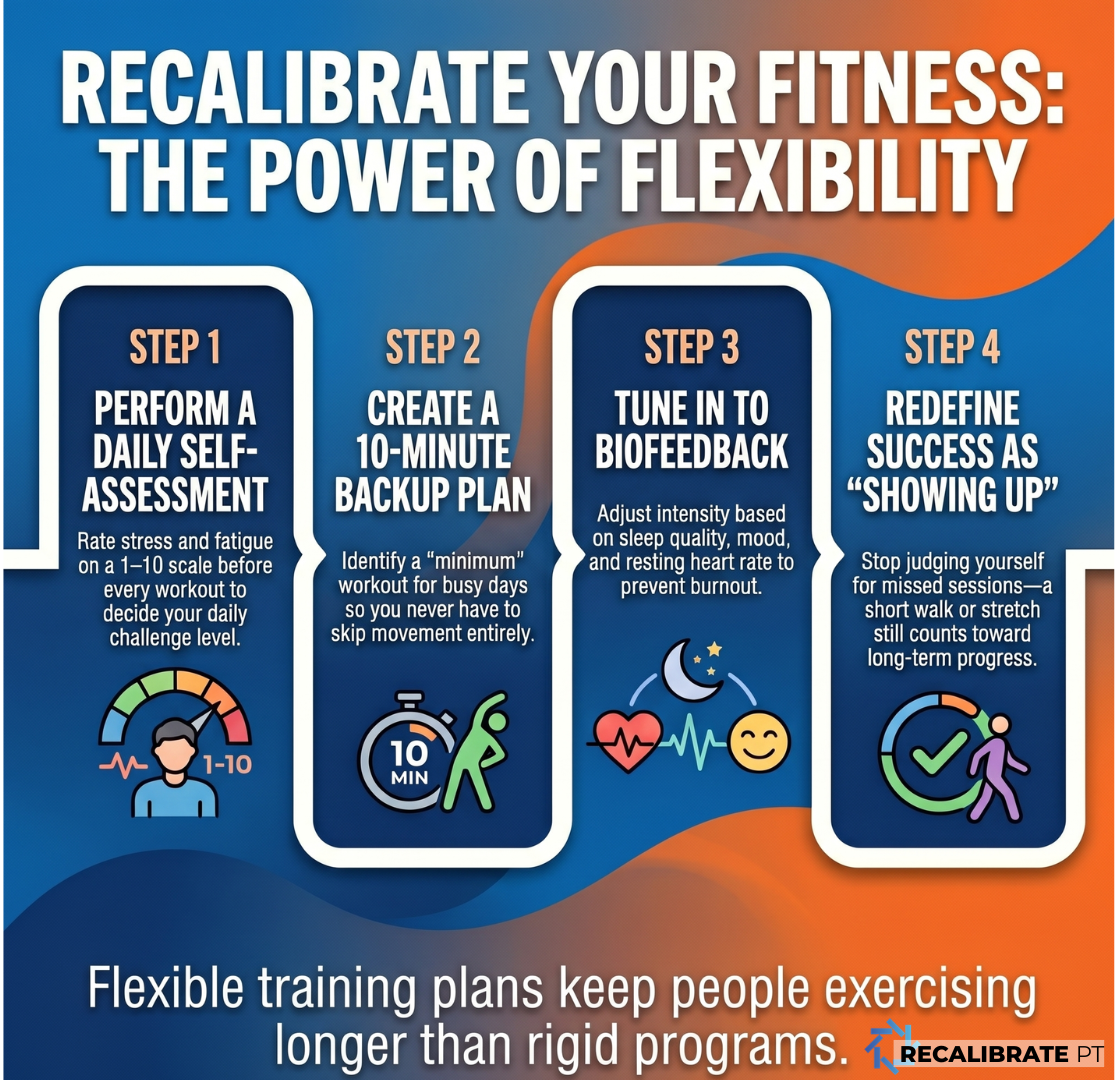
1. Self-assessment: Before you start a workout, check in with yourself. Rate how tired or stressed you feel on a scale from 1 to 10. This helps you decide what level of challenge makes sense today.
2. Backup planning: If your ideal, full-length workout is not possible, have a backup plan ready. Figure out your 10-minute minimum, so you always have a way to keep moving, even on your busiest days.
3. Tune in: Use your sleep, mood, and heart rate to set training intensity. After poor sleep, lower the challenge with a walk or gentle workout. When stressed or in a low mood, use stretching or gentle movement to recover. If your resting heart rate climbs, opt for rest or a shorter session. By adjusting your plan in real time, you prevent burnout or injury and build a sustainable routine.
4. Redefine success: Avoid judging yourself for missing a workout. Focus on showing up however you can each week. If a long run is impossible, a 10-minute walk or stretching still counts. These efforts accumulate and keep you consistent, even when your plan fails.
When you embed fitness in your life, you build long-term health and progress. This week, pick one flexible strategy to try: adjust your workout, listen to your body, or redefine success. Take one step and notice how it feels. You own your progress, and every effort matters.
Share this article